What the Recipe Card Never Says: Learning My Grandmother's Peach Preserve Beside Her, Not From the Page
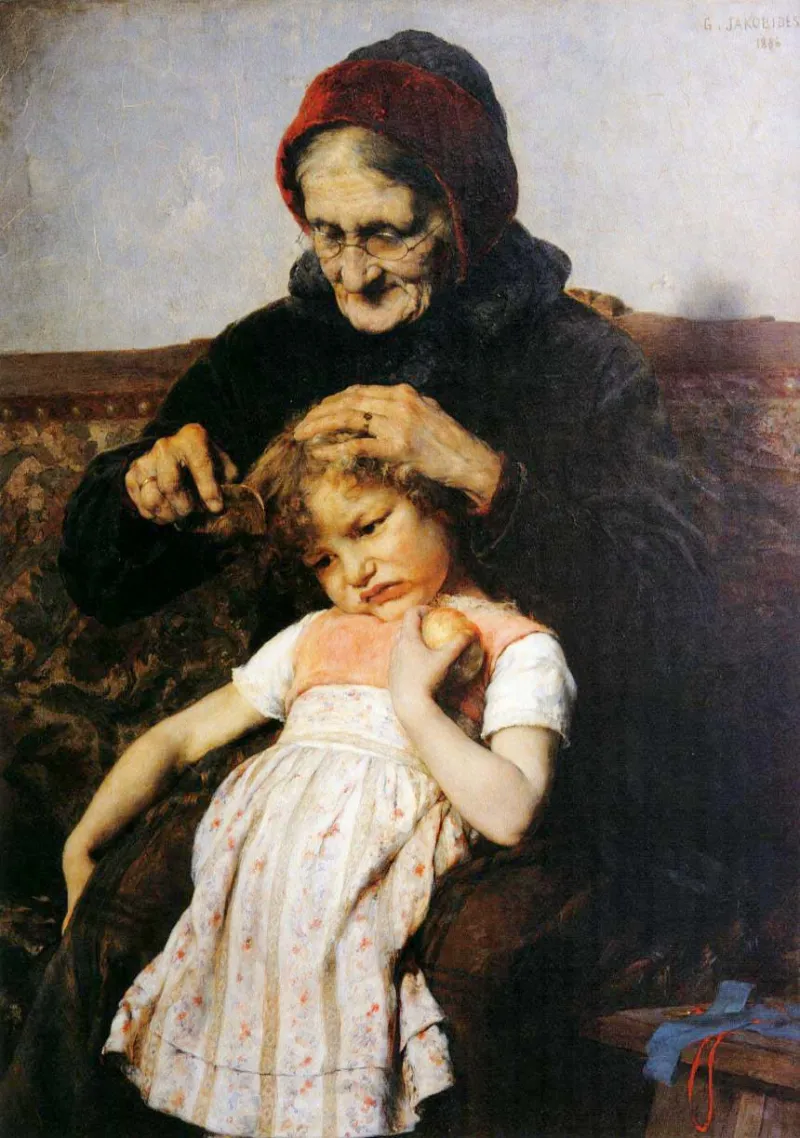
Photo: Georgios Jakobides, Public domain, via Wikimedia Commons
There is an index card in my kitchen drawer, soft at the corners and stained the color of weak tea, that claims to hold my grandmother's peach preserve. It does not. It holds only the outline of it — two cups of sugar, a lemon, 'peaches (about a dozen),' and a final line that reads, simply, cook until right.
For years I treated this card as a failure of record-keeping. Then I began studying Japanese food traditions, and I came to understand that the card was never meant to stand alone. It was a prop for a lesson, a mnemonic for a student standing at the elbow of a teacher. In Japan, this way of transmitting knowledge — kuden, or oral instruction — has long been considered superior to the written word for certain skills. Some things, the thinking goes, can only be passed hand to hand.
The Recipe as a Map, Not the Territory
Japanese cooking culture is full of written recipes, of course. But in the traditional kitchen, and especially in the formal setting of a juku — a private school where a master teaches a craft to a small circle of students — the written recipe is treated as a map, never the territory. The teacher demonstrates. The student watches. The teacher adjusts the student's hands. The recipe card in the student's pocket is a reminder of a lesson already received, not a substitute for it.
This is why so many heirloom recipes, in Japan and in American kitchens alike, are maddeningly vague. 'Cook until right.' 'Add enough sugar.' 'You'll know when it's ready.' These are not sloppy instructions. They are compressed observations — sensory judgments that only make sense once someone has shown you what right looks like.
Attempting the Preserve Alone
Last August, I tried to make my grandmother's peach preserve from the card alone, without calling her. I chose firm yellow peaches from the farmers market, measured everything precisely, and followed the instructions to the letter. The result was not wrong, exactly. But it was not hers.
The preserve I remember from childhood was darker, with a faint caramel edge and a texture that clung to the spoon in slow ribbons. Mine was bright and loose, a good peach jam but not the preserve. I had followed the map perfectly and arrived somewhere else entirely.
What the card could not tell me: that she macerated the fruit in sugar overnight, a step she considered too obvious to write down. That she used the slightly underripe peaches from the bottom of the crate, because they held their shape. That 'cook until right' meant watching for the moment the foam changed from white to pearl — a color shift she had never once named aloud, because she had never needed to. Someone was always in the kitchen with her.
Where the Teaching Lives
Here is the uncomfortable conclusion I keep returning to: the gaps in the recipe are not a flaw to be corrected. They are the curriculum. Every vague instruction marks a judgment call, and every judgment call is a place where a teacher once stood and pointed. When we reconstruct a family recipe from a page alone, we are walking a path with all the footprints erased.
This is the heart of the juku method. A master does not hand down information; she hands down discernment. The student learns not what to do but how to notice — the sound of the simmer, the weight of the spoon, the smell that means five more minutes. None of this can be typed onto an index card.
Before the Last Fruit of the Season
So here is my request, and I mean it with some urgency. Somewhere near you is a person who cooks by instinct — a grandmother, a father, an aunt, a neighbor who has been canning for forty years. Their recipes, the ones they never wrote down, have a shelf life. Peaches have one too, and the season's last fruit is closer than it looks.
Before it disappears, go stand in their kitchen. Bring a notebook, but plan not to need it much. Ask them to make the thing they always make, and watch their hands more than the pot. Ask what the foam looks like when it's almost done. Ask what 'enough' means. Write down the things they say without realizing they are teaching.
Then come home and make it beside them once more if you can. The card in your drawer will never be complete. But a single afternoon of standing next to the teacher can fill in what no page ever will — and that, as we say here at Momoiro Tomejuku, is the whole point of learning a craft the slow way.