Six Lessons From a November Can: Peach Study After the Market Closes
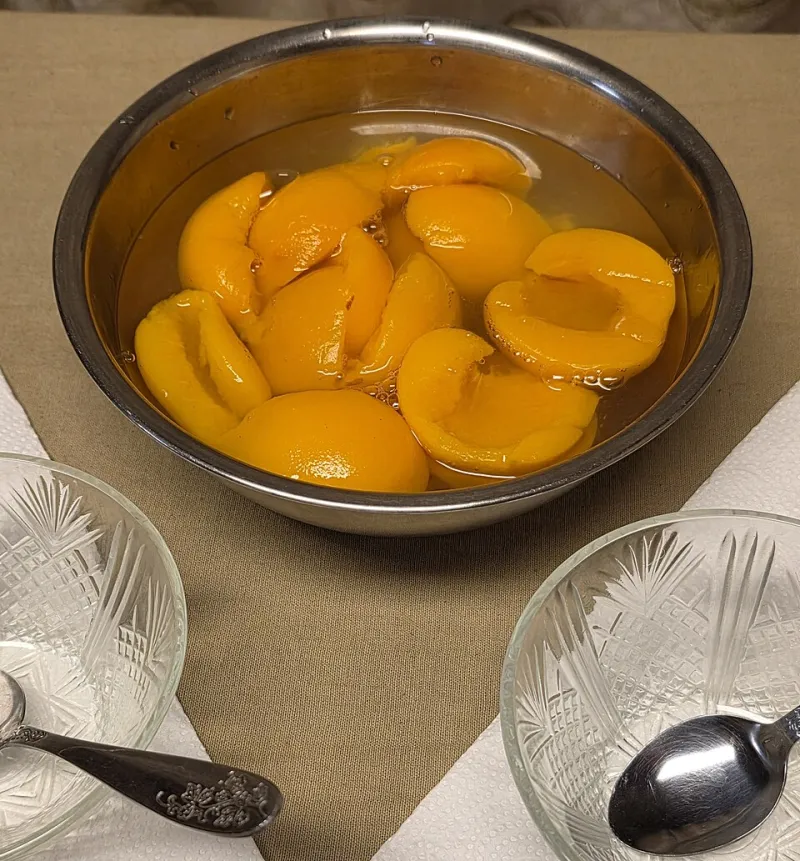
Photo: Horacio Cambeiro, CC BY-SA 3.0, via Wikimedia Commons
By late November, the fresh peach is a memory. The farmers market has packed away its tents, the last California crop has moved through the stores, and the American shopper who spent the summer learning to press and smell and slice may feel that the semester is over. It is not. The can is a classroom.
This is an argument for the canned peach, not as a substitute for the fresh one, but as a legitimate object of study. At Momoiro Tomejuku, the principle is simple: the lesson matters more than the ingredient's pedigree. A student who can taste syrup with attention, compare textures, and portion a can with intention is still practicing peach study. In fact, they may be practicing it more carefully than the shopper who buys a perfect summer fruit and eats it over the sink.
Lesson One: Read the Syrup as a Recipe
A can of peaches is a small preserved world. The ingredient list tells you what kind of world it is. Some cans contain peaches, water, and sugar. Others contain peach juice concentrate, corn syrup, or a combination. Light syrup, heavy syrup, and no-sugar-added packs are not moral categories; they are different starting points.
Pour a spoonful of drained syrup into a small glass. Taste it. If it is cloying, add a squeeze of lemon. If it is flat, add a pinch of salt. Do not add sugar reflexively. The juku exercise is to balance what is already there, not to cover it. This is a lesson in restraint that transfers directly to fresh-fruit poaching.
Lesson Two: Texture Is Information
Canned peach halves hold their shape. Slices soften faster. A can of firm cling peaches from California behaves differently from a softer freestone pack. None is wrong. Texture tells you what the fruit can do.
Compare two cans side by side if your supermarket allows it. Note the cut, the pack style, and the origin. A half is a vessel; a slice is an ingredient. The half can carry a spoonful of ricotta. The slice can fold into a cobbler or a salad. Learning to choose the cut is learning to choose the dish.
Lesson Three: Acid, Salt, and Fat
Canned peaches are sweet and often low in acidity. That makes them a useful teaching fruit for pairing. Spoon them over plain yogurt with a little lemon zest. Lay them on ricotta with black pepper. Add a few drops of sherry vinegar to their syrup and serve them beside pork or roasted squash. The point is not to make canned peaches fancy. The point is to train the palate to ask what the fruit needs.
In a juku tasting, students are asked to taste the peach alone, then with acid, then with salt, then with fat. The differences are small but real. A fruit that seemed one-dimensional at the first spoonful becomes wider when the cook stops treating it as a dessert.
Lesson Four: Temperature Changes the Lesson
Chilled canned peaches are crisp and direct. Warmed peaches release aroma. Simmer a few halves in their own syrup with a strip of lemon peel or a piece of cinnamon, then let them cool slightly. The fruit softens, the syrup thickens, and the kitchen begins to smell like a study room.
Temperature is a technique, not a decoration. A warm peach is a different ingredient from a cold one. Students who learn this in November will remember it in July.
Lesson Five: Portioning Is Preservation
A can is a semester. Open it, and you have committed to several lessons. Drain the peaches into a glass container, keep the fruit covered, and refrigerate. Follow the label and standard food-safety guidance for opened canned fruit; in general, transfer leftovers out of the can and use them within a few days. The syrup can be frozen in small jars for future poaching or drinks.
If you cannot finish the can, freeze slices in a little syrup, leaving headspace. Label the container with the date and the lesson. This is not busywork. Portioning is how a preserved food becomes a practice instead of a forgotten leftover.
Lesson Six: Label Literacy and Origin
The back of the can is a short reading assignment. Where were the peaches grown? What is the pack style? Is the fruit in juice or syrup? Does the label mention a grade or a specific variety? American canned peaches often come from California, and the cling peach is a familiar pack. Knowing this does not make the can a farmers market. It makes the can legible.
A juku student should be able to say what they are eating and why. That habit begins with the label.
When the fresh season returns, the canned peach will not replace it. It will have done something more useful. It will have kept the student in practice through the quiet months, teaching syrup balance, texture, pairing, temperature, portioning, and attention. The can is not an apology for November. It is a classroom with a pull tab.