Notes in the Margin of Summer: Running a Peach Tasting as a Formal Study Session
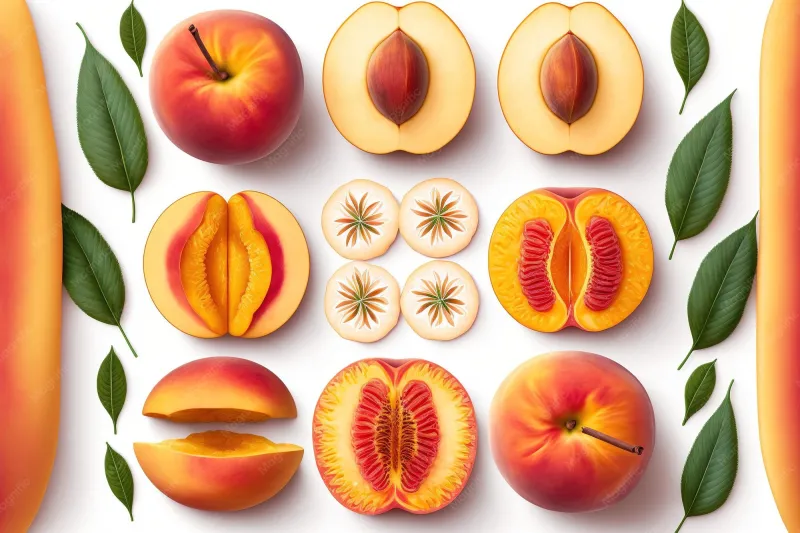
Photo: sliced peach varieties arranged on white plates tasting comparison table, via img.freepik.com
In Japan, a juku is a place of concentrated study — an academy where a single subject is examined with patience and rigor. At Momoiro Tomejuku, we believe the peach deserves no less. A tasting, understood properly, is not a party. It is a recitation: students gather, the material is presented in careful order, and everyone writes down what they observe.
What follows is a framework for hosting such an evening in your own home, whether around a kitchen table in Ohio or on a apartment balcony in Los Angeles. Four to six guests is ideal. More than that, and the notes grow thin and the conversation grows loud.
Preparing the Syllabus
Choose three to five peach varieties available in your region — a yellow-fleshed variety such as O'Henry, a white peach like White Lady, a doughnut (Saturn) peach, and, if you can find them, an heirloom or local farmstead variety. Source them from the same market or farm when possible so that ripeness, not provenance, becomes the variable under study.
Ask each fruit to ripen to the same degree. This is the hardest assignment of the evening. Purchase several days ahead, hold them at room temperature, and test each one the morning of the gathering by scent and gentle pressure at the shoulder. Reject any fruit that is not ready; an unripe sample will distort the entire lesson.
The Order of Presentation
At a formal tasting, sequence matters. Begin with the most delicate and proceed toward the most assertive:
- White peach — floral, low-acid, easily overwhelmed
- Doughnut peach — sweet, soft, distinctive in shape
- Yellow-fleshed classic — the reference standard
- Heirloom or unknown variety — the examination question
Serve each peach in the order it should be eaten: skin on, sliced into wedges just before presentation. Between varieties, offer plain water and a slice of cucumber or a plain cracker to reset the palate. Do not serve wine, coffee, or anything aromatic; this is a classroom, not a salon.
The Scorecard
Prepare a simple card for each guest — heavy paper, printed in advance — with these five fields:
- Appearance: color of flesh, blush of skin, juiciness at the cut
- Aroma: what you smell before the first bite, held at nose level for three seconds
- Texture: firmness, the give of the flesh, whether it dissolves or resists
- Flavor and acidity: sweetness measured against tang
- Finish: what remains on the tongue after swallowing, and for how long
Ask guests to write in complete sentences. A single word — sweet, good — teaches nothing. The discipline of the sentence is the discipline of attention, and attention is the entire curriculum.
Framing the Evening as Instruction
The host opens with a brief statement of purpose: tonight we study one fruit, side by side, and we record what we find. Phones are set aside. Each variety is introduced by name and origin, then tasted in silence for the first minute before discussion begins.
After all varieties have been tasted, compare notes aloud. Where did the group agree? Where did the cards diverge? Disagreement is not failure here — it is data. The student who found the white peach cloying and the student who found it transcendent have both learned something about their own palate.
Close the session by ranking the varieties as a group, and — this is the juku tradition worth keeping — by asking each guest to name one thing they will taste for differently at the market next summer.
A Note on Hospitality
Do not mistake formality for coldness. Offer tea afterward, sit longer than the lesson requires, and send each guest home with a single peach and their completed scorecard. The written record, as we have argued elsewhere in these pages, is what turns a pleasant evening into a study. Next year, when the crates arrive, you will open your cards from this night and find that summer has a syllabus after all.