What the Peach Says Before You Touch It: Sound as the First Language of Ripeness
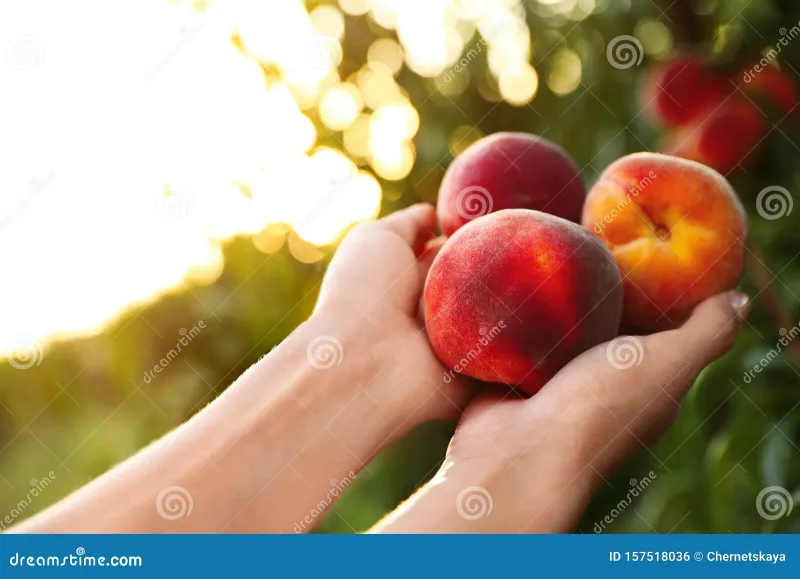
Photo: hands gently cupping a ripe peach close up soft light, via thumbs.dreamstime.com
At the farmers market, most American shoppers speak two languages of ripeness: the squeeze and the smell. Both are useful. Both, my teacher insisted, come second.
"First, listen," she said, cupping a Shimizu peach in her palm without pressing. "The fruit announces itself before you ask it a question."
I thought this was poetry. It took me a summer to understand it was technique.
Why Sound Comes Before Touch
In the Japanese tradition of selecting produce, the hand is a blunt instrument. A squeeze bruises the flesh at the point of pressure, and worse, it tells you about the peach's past, not its future. Sound, by contrast, is a language of structure — and structure is what ripeness changes.
A peach is essentially a bundle of cells, each wrapped in a wall made largely of pectin and cellulose. On the tree, those walls are rigid, and the fruit resists. As the peach ripens, enzymes called pectinases dismantle the pectin that glues the cells to one another. The walls soften; the cell-to-cell bonds loosen. What was a brick becomes a mosaic, each tile slightly loose in its mortar.
That loosening has an acoustic signature. When you cup a ripe peach gently — not squeeze, cup — the cells shift and settle minutely against one another, and the flesh gives off a faint, almost sub-audible exhale. Old growers in Okayama and Fukushima describe it as the fruit "letting out its breath." It is not the hollow thump of a melon. It is quieter: a tiny creak of give, felt in the fingertips as much as heard in the ears.
The unripe peach says nothing. Its cell walls are still taut. Cup it and you hear only your own hands.
The Juku Method: Three Steps to Listening
In my notebook from that season, the exercise is written as a progression. Practice it on any peach, then check your judgment the usual ways until your ear can be trusted alone.
Step 1: Silence yourself. This sounds ceremonial, but it is practical. Step away from the market noise if you can — a corner of the stall, a pause by the truck. Hold the peach loosely in both palms, fingers spread, as if warming it. Do not press. Wait five seconds. Attention, my teacher said, is a muscle that takes ten seconds to arrive.
Step 2: Cup, don't squeeze. Slowly close your fingers until your palms form a cradle, letting the peach's own weight settle into them. The weight itself provides all the pressure needed. You are listening for two things: a faint settling sound — a whisper of give — and a subtle change in the way the fruit feels as it rests. Ripe flesh seems to accept your hand. Firm flesh holds a boundary.
Step 3: Confirm, then compare. Smell the blossom end, check the background color near the stem, and when you get home, cut it open. Record what you heard against what you found. This last step is the actual lesson. The ear learns only from feedback.
The Week of the Listening Ear
For American shoppers, the peach presents a particular frustration: supermarket fruit is often picked hard and ripens unevenly, which is why so many of us have been betrayed by a peach that was rock-like on Tuesday and mealy by Friday. Mealiness itself is a sound problem — chilling damage collapses the cell structure irregularly, and mealy flesh feels gritty, dead, acoustically flat.
Here is a seven-day training plan, drawn from my notebook and adapted for a US market season:
- Days 1–2: At your market or grocery, cup five peaches without buying. Sort them by what you hear into "silent," "settling," and "unsure." Cut one from each group at home. Take notes.
- Days 3–4: Repeat with peaches at different stages — a rock-hard one from the grocery and a tree-ripe one from a farm stand if you have one nearby. The contrast teaches faster than any description.
- Day 5: Blind test. Have a family member cup two peaches and hand them to you. Judge by ear alone.
- Days 6–7: Shop entirely by sound and sight — no squeezing. Buy what your ear approves. Evaluate at home, and write it down.
Most people who complete the week report the same thing: they stop squeezing altogether. The habit of the gentle cup replaces the reflexive squeeze, and their peaches stop bruising on the ride home.
A Quieter Kind of Skill
There is a reason this practice belongs in the juku tradition rather than a produce manual. Learning to hear a peach requires you to slow down, to give the fruit a moment of stillness before judgment. It reframes selection from a test you administer to a conversation you join.
The peach, in Japanese food culture, is the queen of fruits — treated with a delicacy bordering on reverence. To listen for ripeness is simply to extend that reverence one step earlier in the relationship. You handle the fruit more gently because you have paid it more attention.
And attention, as every student of the kitchen eventually learns, is the ingredient that cannot be bought at any market.