One Peach, Three Pantry Staples: Salt, Vinegar, and Sugar the Japanese Way
Photo: Adam Brioza, CC BY 3.0, via Wikimedia Commons
Walk into a well-stocked Japanese home kitchen in late July, and you may notice something puzzling: bowls of salt flecked with pink, a jar of pale vinegar steeping on the counter, a crock of sugar that smells faintly floral. These are not experiments. They are the quiet arithmetic of a kitchen that refuses to waste a good season.
At Momoiro Tomejuku, we teach that preservation begins before the fruit is ever imperfect. A peach at peak ripeness — even a peach destined for the condiment jar — deserves to be at its best. This article covers three foundational pantry preparations, with ratios you can trust and weeknight recipes that put them to work.
Momo-Shio: Peach Salt for the Edge of the Plate
Peach salt, or momo-shio, is the simplest of the three and perhaps the most useful. Flaky salt is briefly blitzed or pounded with dried peach skin, then toasted low and slow until completely dry. The result is a mineral, faintly sweet seasoning that Japanese cooks reach for in the same way American cooks reach for a finishing salt — for grilled pork chops, heirloom tomatoes, edamame, or the rim of a summer cocktail.
Ratio: 1 cup coarse kosher or flaky salt to the peeled skin of 4 ripe peaches.
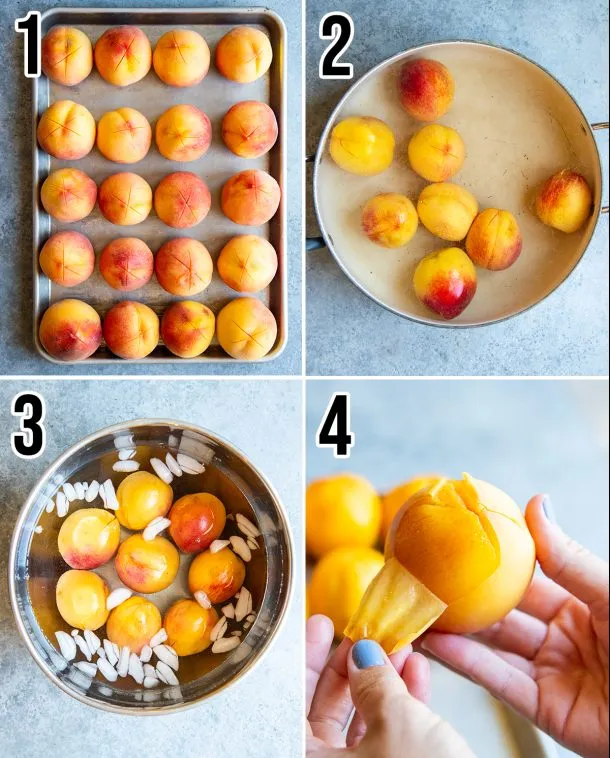
Method: Dry the peach skins in a 200°F oven or a dehydrator until brittle — this usually takes 2 to 3 hours and can be done alongside the hang-drying method we covered in an earlier lesson. Pulse the dried skins with the salt in a food processor until the flecks are small but visible. Spread on a parchment-lined sheet and return to the oven for 30 minutes to remove any residual moisture. Store in an airtight jar away from light; it keeps six months, though it rarely lasts that long.
Weeknight use: Momo-shio roast chicken. Pat dry a spatchcocked bird, oil the skin, and season generously with peach salt before roasting at 425°F. The sugars in the fruit flecks caramelize into a lacquered, gently sweet crust. Finish the pan juices with a second pinch.
Quick Peach Vinegar: Sharpness With a Soft Heart
True fruit vinegar takes months, but a Japanese sudachi-style quick infusion gets you something lovely in two weeks. Raw apple cider vinegar becomes the base; ripe peach flesh and a modest amount of sugar round its edges into something mellow, rosy, and salad-ready.
Ratio: 2 cups raw apple cider vinegar, 2 cups chopped ripe peach, ¼ cup granulated sugar.
Method: Combine in a clean glass jar, stir until the sugar dissolves, and cover with a breathable cloth rather than a lid — a live vinegar benefits from airflow. Steep at room temperature, out of direct sun, for 14 days, pressing the fruit down every few days. Strain through fine muslin, funnel into a bottle, and refrigerate. Use within three months for brightest flavor.
Weeknight use: Peach vinegar slaw. Shave half a head of green cabbage and two carrots on a mandoline. Toss with 3 tablespoons peach vinegar, 1 tablespoon neutral oil, a teaspoon of honey, and flaky salt. Let it sit 20 minutes before serving alongside pulled pork or fried tofu.
Peach Sugar: The Patient One
The third staple requires almost nothing but time and restraint. Layering peach-dried fruit or skin with sugar draws out moisture and aroma, perfuming the crystals over several weeks. Japanese home cooks use this scented sugar in kinako-style dustings, tea sweets, and fruit syrups.
Ratio: 4 cups granulated sugar to 1 cup thoroughly dried peach pieces, cut small.
Method: Layer fruit and sugar in a wide-mouth jar, seal, and store in a cool pantry. Turn the jar daily for the first week to prevent clumping. After three weeks, sift out the dried fruit (reserve it for tea) and keep the perfumed sugar in a sealed container.
Weeknight use: Peach sugar buttermilk biscuits. Replace up to half the sugar in your favorite biscuit recipe with peach sugar, and brush the tops with cream before a final dusting. The aroma blooms in the oven in a way plain sugar cannot imitate.
A Note on Storage and Care
All three preparations share one enemy: moisture. Keep every jar away from the stove, use dry utensils, and label with the date. Salt and sugar are effectively shelf-stable; the vinegar belongs in the refrigerator after straining. And as our sensei reminded us each August, these are not merely recipes but a form of respect — the peach gave its whole self, so the pantry should accept all of it.