The Quiet Ceremony: What Serving Peaches With Chopsticks Taught My Family About Attention
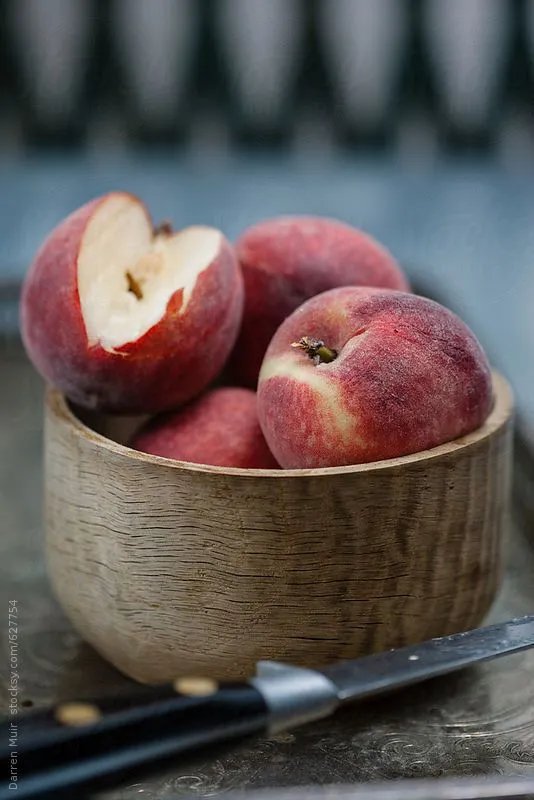
Photo: freshly peeled peach cut into wedges served in shallow ceramic bowl on wooden table, via i.pinimg.com
The first time I watched my host mother peel a peach, I thought she was showing off. We were in a farmhouse kitchen outside Okayama, and she worked with a paring knife in slow, unbroken spirals, the skin falling away in a single ribbon that she coiled neatly on the cutting board. Then she quartered the fruit, arranged it like a blossom in a shallow bowl, and set it before me with a pair of small wooden chopsticks.
No one had announced dessert. There was no fanfare. And yet the moment felt unmistakably ceremonial, in the way that the most Japanese rituals are: quiet, precise, and entirely about the person receiving the fruit.
Fruit as a Gesture, Not a Course
In the United States, we tend to treat fruit as an afterthought — something grabbed from the bowl on the way out the door, or spooned into a lunchbox. In Japan, seasonal fruit carries a different weight. A perfect peach, chilled to the precise temperature where its perfume is fullest, offered to a guest, is a compliment. The subtext is unmistakable: I thought of you. I chose this. I took the time.
My host mother explained that chilling the fruit in the refrigerator for a few hours — never longer, never in ice water — was part of the gift. A warm peach is fine. A properly chilled one, at around 50°F, is a different fruit entirely: firmer to the knife, more fragrant at the first bite, its sweetness held in check until it blooms.
The Table-Side Peel
What changed my family's summers, though, was the ritual of peeling at the table. On warm evenings now, I bring the whole bowl of chilled peaches, a knife, a small bowl for the skins, and a stack of shallow dishes to the dinner table. My children take turns. The peeling is slow, and the slowness is the point.
There is a practical argument for this, and I will make it, because I am an American and I cannot help myself: peaches peeled just before eating lose almost nothing to oxidation, and the aroma — the part most of us waste by peeling at the sink twenty minutes early — arrives at full strength. But the deeper argument is that the work becomes visible. Children who would never notice a peach sliced in the kitchen will watch one being peeled in front of them with genuine suspense.
How to Cut and Present
Presentation in the Japanese kitchen is not decoration; it is information. A peach cut into six even wedges and fanned in a circle reads as generous. Quartered and arranged with the cut faces up, it reads as abundance. My household has settled on a simple standard: wedges, slightly tilted, arranged in a pinwheel, served in shallow bowls so the juice pools where a spoon can find it.
And the chopsticks — yes, we use them for peaches. Fruit forks exist in Japan for exactly this purpose, but a pair of everyday chopsticks works beautifully for lifting slippery wedges without stabbing the fruit and losing its juice to the plate. My kids were skeptical for one summer. Now they hand me the peach knife unprompted.
Four Habits to Borrow This Season
If you want to try this in your own home, start small. These are the practices that survived the transplant from that Okayama kitchen to our kitchen in Ohio:
- Chill with intention. Refrigerate peaches for 3 to 4 hours before serving, never overnight, and let guests know the fruit has been waiting for them.
- Peel at the table. One peach, one knife, one small audience. Let the skin fall in a ribbon and set it aside with care.
- Cut for the eye. Even wedges, arranged deliberately, in shallow bowls. Ten extra seconds of arrangement changes the entire register of the meal.
- Offer, don't serve. Present the bowl and pause. In Japan, the smallest pause before the first bite is where the gratitude lives.
None of this requires a trip to Japan or a set of specialty tools. It requires only the decision that a peach is worth five unhurried minutes. My family eats a great deal of fruit in the summer now, but more than that, we sit together a little longer — and the peach, pink and chilled and waiting, is the reason we do.