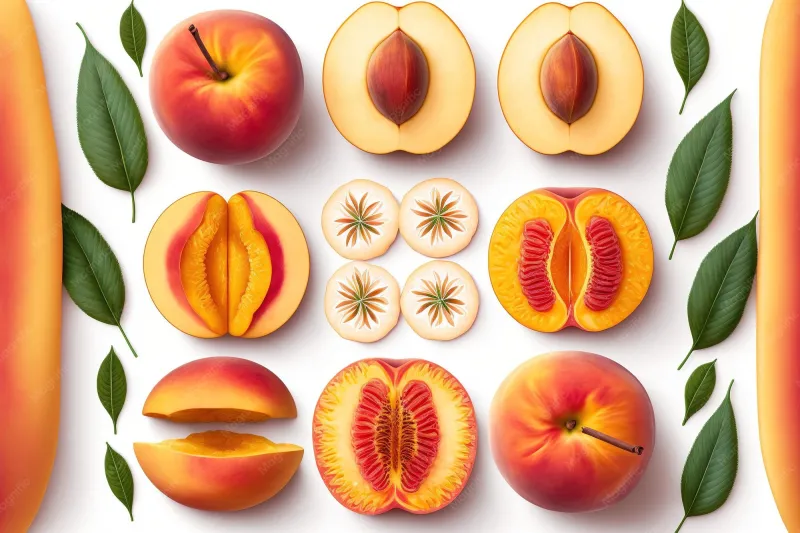
Gratitude Served First: Planning a Peach Kansha Dinner That Honors the Hands Behind the Harvest

Photo: Shixart1985, CC BY 2.0, via Wikimedia Commons
Before the First Bite, a Name
In many Japanese households, the phrase itadakimasu is spoken before eating, but the gratitude it carries extends well beyond a polite reflex. It reaches the farmer who tended the soil, the hands that harvested, the truck that carried, the cook who stood at the stove. At Momoiro Tomejuku, we have spent considerable time teaching the techniques of the peach — how to select it, cut it, preserve it. But technique without acknowledgment is incomplete. This summer, we propose a different kind of study: a kansha dinner, hosted at your own table, built around the peaches of a single grower whose name you actually know.
Why One Farm, and Not the Supermarket Bin
The exercise loses its meaning if the fruit arrives anonymous. A bag of peaches from a national chain tells you nothing about who grew them, and nothing, therefore, to be grateful for in a specific way. A farm stand outside your town, a community-supported agriculture share, or a farmers market vendor — these give you a person, and often a story.
When you purchase directly, ask questions. How long has the family farmed this orchard? What variety ripens latest in the season? Was this summer kind to the trees? You will find that most growers are eager to answer, and their answers become the raw material of your dinner. One of our students in Georgia learned that her peach farmer's grandfather planted the orchard in 1954; that single fact changed how she treated every fruit in her kitchen that August.
Structuring the Evening the Juku Way
A kansha dinner need not be elaborate. In fact, restraint serves the purpose better than showmanship. We suggest three courses, each featuring the same farm's peaches prepared differently:
- An opening dish that presents the peach nearly raw — sliced, perhaps with a whisper of salt — so guests taste the fruit as the farmer grew it.
- A middle course where the peach meets heat: grilled alongside pork, folded into a savory rice dish, or simmered into a light broth.
- A closing course that transforms the fruit entirely, such as a preserved peach over ice cream or a simple peach syrup stirred into tea.
Before the meal begins, the host reads aloud a short account of the farmer — their name, their land, their season. This is the kansha moment. It takes ninety seconds. Guests at our test dinners consistently report that the fruit tastes different afterward, though nothing about the recipe has changed. What has changed is attention.
The Menu as a Document of Thanks
Print the menu. This matters. A handwritten or simply typeset card, set at each place, should carry the farmer's name and orchard at the top, above the dishes themselves. Include one line about the growing season — a late frost survived, a dry July, a bumper harvest. Your guests will read it while waiting for the first course, and by the time the peach arrives, the name will already be familiar.
A Gratitude Card for Your Own Table
To make this practice portable, we offer a simple template readers may copy by hand onto cardstock:
Tonight we thank: [Farmer's name], of [Orchard or Farm name], in [Town, State]. The season gave: [One sentence about this year's harvest.] We eat with thanks for the earth, the hands, and the fruit.
Encourage dinner guests to take the card home. Gratitude, like a good peach, does not keep well when hoarded.
What Changes When You Know the Name
We will offer one firm opinion here, as this is the conviction at the heart of the practice: knowing whose hands picked your fruit changes how you cook it. Waste becomes harder to excuse. Overripe fruit becomes an ingredient rather than a loss. The bruised peach at the bottom of the bag, which might have been discarded in an anonymous kitchen, becomes a syrup, a sauce, a small act of respect for the labor that produced it.
The Japanese kitchen has long understood that a meal is a chain of hands, and that naming the first link honors all the others. As the American peach season draws to its close, we invite you to set one table where the grower is present — not in body, but in name, in story, and in every slice.