Words Before Sweetness: A Japanese Tasting Grammar for American Peaches
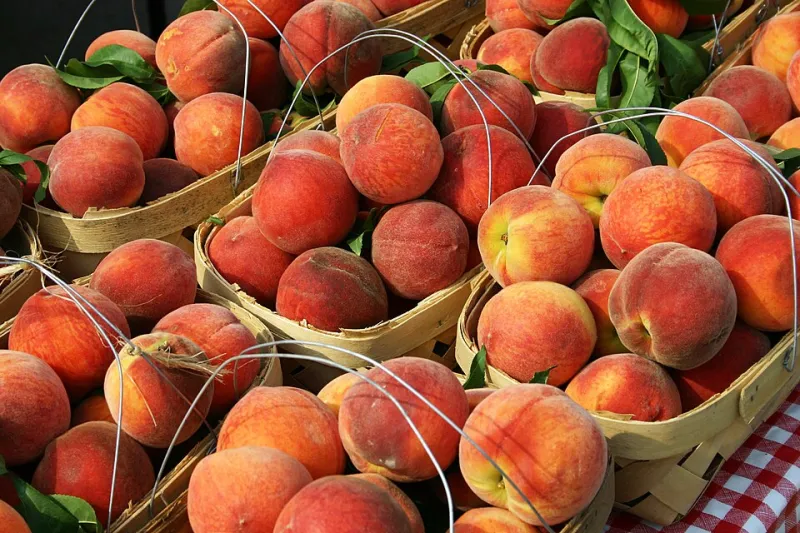
Photo: Alabama Extension, CC0, via Wikimedia Commons
American peach shoppers have a narrow vocabulary for a wide experience. At the farmers market, a grower offers a slice and asks what we think. We say 'sweet' or 'juicy' and perhaps 'good.' These words are not wrong, but they are blunt instruments. They tell the grower almost nothing about why one peach pleases and another disappoints. The Japanese juku habit of formal tasting offers a corrective. It treats description as a skill, not a flourish, and it gives eaters a way to compare fruit without reducing it to a single score.
The Poverty of 'Sweet and Juicy'
'Sweet' is a measurement, but it is not a description. Two peaches can carry the same sugar level and taste entirely different: one bright and nervy, the other flat and heavy. 'Juicy' says something about texture, but nothing about aroma, skin, acidity, or finish. When we rely on these words, we cannot explain why an Elberta from a New Jersey orchard moves us more than a supermarket peach of unknown origin. We cannot tell a grower what we want next year. Worse, we begin to treat sweetness as the only virtue, which flatters bland fruit and punishes the complex.
Five Axes of Peach Speech
The juku tasting vocabulary is not secret. It is simply a set of five axes that can be learned in an afternoon. Kaori is aroma—the smell at the stem end and the perfume released when the fruit is cut. Amami is sweetness, but judged with attention to how it sits on the tongue. Sanmi is acidity, the bright edge that keeps a peach from tasting tired. Kuchiatari is mouthfeel, including the resistance of the flesh and the amount of juice. Kawa no kanji is the skin's presence: its fuzz, thickness, and slight bitterness. To these we add kire, the finish—what remains after swallowing, and for how long.
Reading American Varieties Through Japanese Terms
An Elberta, the classic yellow freestone, often shows a generous kaori and a balanced push-pull between amami and sanmi. Its finish is longer than many modern varieties, which is why old-timers call it a peach that tastes like a peach. A Cresthaven tends to be firmer, with a clean sweetness and milder acidity; it holds its shape on the grill and in a pie, but its kawa no kanji can be more noticeable. A white-fleshed specialty peach, such as a Babcock or a Snow King, may offer low acidity, a floral nose, and a honeyed finish. These are tendencies, not rules. Weather, ripeness, and orchard practice can overturn them in any given week.
A Tasting Card for the Saturday Market
Bring a small notebook and a pen. At each stall, ask for a slice from the same part of the fruit. Smell it before tasting. Then score each axis from one to five: aroma, sweetness, acidity, mouthfeel, and finish. Add a note about the skin and a single word for the overall impression. Do not rank the peaches against each other until you have described each one on its own terms. This is the juku method: first observe, then compare. The card becomes a record of the season and a more precise way to talk with growers.
Language as a Form of Respect
A better vocabulary does not make us fussier. It makes us more attentive. It lets us say that a peach is not sweet enough but beautifully aromatic, or that it is sugary but hollow at the finish. That kind of speech respects the fruit and the hands that grew it. It also gives American shoppers a way to move beyond the binary of good and bad. The peach is not asking to be praised. It is asking to be described.