The Five-Generation Peach: Tracing Your Family's Orchard Roots Through Oral History
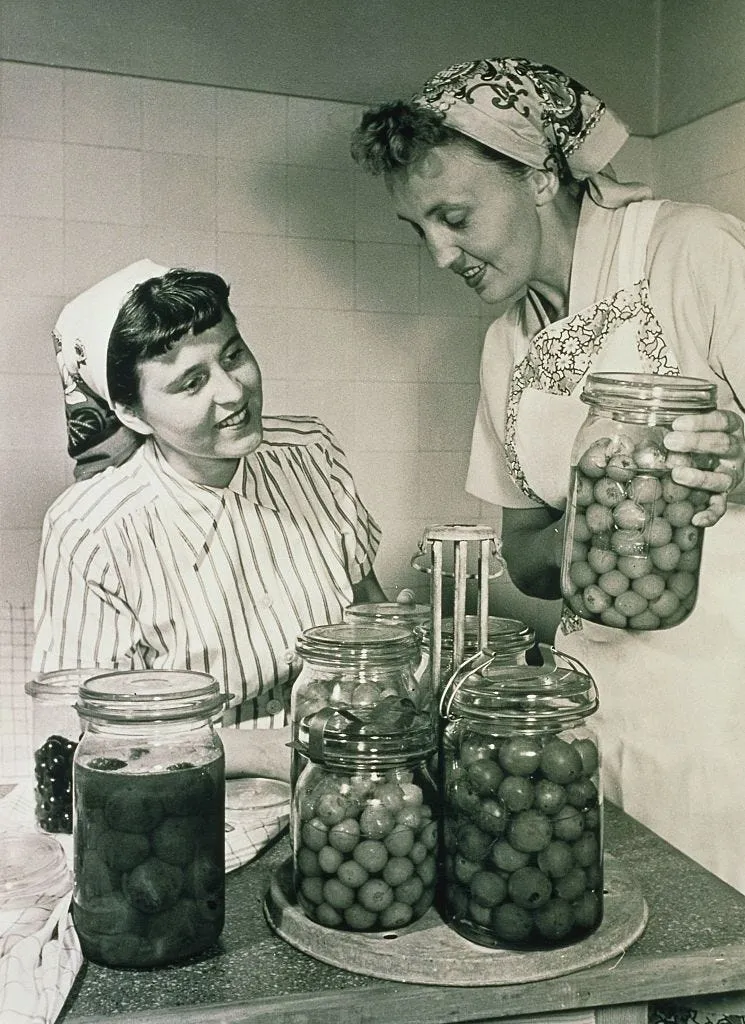
Photo: vintage family orchard photograph elderly grandmother hands peach canning kitchen, via hips.hearstapps.com
Every student who passes through a traditional Japanese school of craft is asked, sooner or later, a deceptively simple question: whose hands taught yours? The answer is called ie gara—the weight of one's household line—and it reminds us that no technique, however humble, arrives unaccompanied. A knife stroke, a preservation method, a way of judging ripeness by scent alone: each is an inheritance.
For American students of the peach, this question opens a door. Somewhere in nearly every family tree—particularly across the South, the Midwest, and the valleys of California—there is a grandmother's preserve kettle, an uncle's orchard long since subdivided, a variety name remembered only as "the yellow ones that didn't bruise." This article offers a framework for finding them.
Begin With the Living Archive
Before you open a single genealogy database, open a conversation. Oral history, in the Japanese tradition of passing technique from hand to hand, is not a casual chat but a structured interview. Prepare as you would for any formal study session:
- Choose the setting carefully. A kitchen table, ideally with a peach dish or two present. Objects summon memory in ways questions cannot.
- Ask about process, not just people. "Who made the peach preserves?" yields a name. "Walk me through how she made the preserves" yields a technique—when the sugar went in, how long the fruit macerated, what she did with the skins.
- Record with permission. A phone voice memo is sufficient. What matters is that the words survive.
Ask the elders in your family these five questions, and write the answers in your peach journal:
- Did anyone in our family grow, sell, or preserve peaches? Where, and when?
- What variety did they favor, and what made it worth the trouble?
- Was there a dish—sweet or savory—that appeared every summer without fail?
- Who taught them? Did anyone teach you?
- Is there a recipe that was never written down?
That last question is the heart of this lesson. The unwritten recipe is the most fragile document in a family's possession.
Recovering the Recipe That Was Never Written
In our previous lessons on preserve-making beside a grandmother, we noted that recipes transmitted by demonstration often omit what the teacher considered obvious. When your relative says "you just cook it until it looks right," you are not hearing an incomplete answer—you are hearing a sensory standard, which is arguably more valuable than a measurement.
Your task is transcription by reconstruction:
- Cook it together, if distance allows. This is the ideal. Stand beside them with a notebook.
- Interview by phone during the process. If they are making it and you are not, have them narrate. Ask what they are seeing, smelling, hearing. The sound of syrup reaching set point is a piece of family knowledge.
- Document the failures. Ask what went wrong the year the batch crystallized or molded. A family's preservation wisdom lives as much in its cautions as its instructions.
- Name the gaps honestly. Write "amount unknown—estimated two cups" rather than inventing precision. An archive that admits uncertainty invites the next generation to test and correct it.
Mapping the Regional Tradition
Family peach history is also regional history. A family from Georgia may carry memories of Elberta peaches, the variety that dominated Southern orchards for a century. A Michigan or Pennsylvania line may recall canning seasons built around Red Havens. Families with roots in Colorado's Western Slope might remember Palisade peaches arriving in wooden crates.
Cross-reference what your relatives remember against county agricultural extension records, local historical society newsletters, and digitized newspapers. Seed libraries and heirloom fruit conservancies—such as those tracking lost American varieties—can sometimes identify an orchard cultivar from a fragment of description: "flat fruit," "white flesh," "freestone, came off the pit clean."
If your family's orchard still exists in any form, even as a single surviving tree on a former homestead, treat it as a primary source. Photograph it. Note the bloom and harvest dates for a year. If fruit is available, taste it and record your impressions formally, as you would any study fruit.
Building the Family Peach Archive
Your personal peach journal records your own season of study. The family archive extends that record backward. We suggest a simple structure—a binder or folder with four sections:
- Lineage. A one-page summary of each person connected to the family's peach tradition, with dates, places, and their role.
- Recipes and techniques. Transcribed instructions, including the sensory standards and the cautions, clearly marked as reconstructed where they are.
- Images and documents. Photographs of orchards, canning labels, handwritten notes, even a 4-H ribbon or county fair entry.
- Open questions. What remains unknown, and whom you might still ask.
Leave the final section deliberately unfinished. An archive that declares itself complete has stopped listening.
Why Lineage Matters in the Study of Fruit
The Japanese concept of ie gara does not romanticize the past; it situates the present. When you know that your great-aunt in Missouri pitted forty quarts of peaches every August, your own twenty-minute morning preparation acquires context—and your gratitude deepens, in the spirit of the kansha dinner we have explored before.
It also changes what you teach. A student who knows where their technique came from tends to transmit it more faithfully, with the names of teachers attached. This is how a family's way with peaches survives another five generations: not preserved in syrup, but in the living record of who taught whom.
Begin this summer. One relative, one recorded conversation, one page in the archive. The peach in your bowl has ancestors too.