When the Freezer Becomes a Shrine: Capturing Shun in a Single Frozen Slice
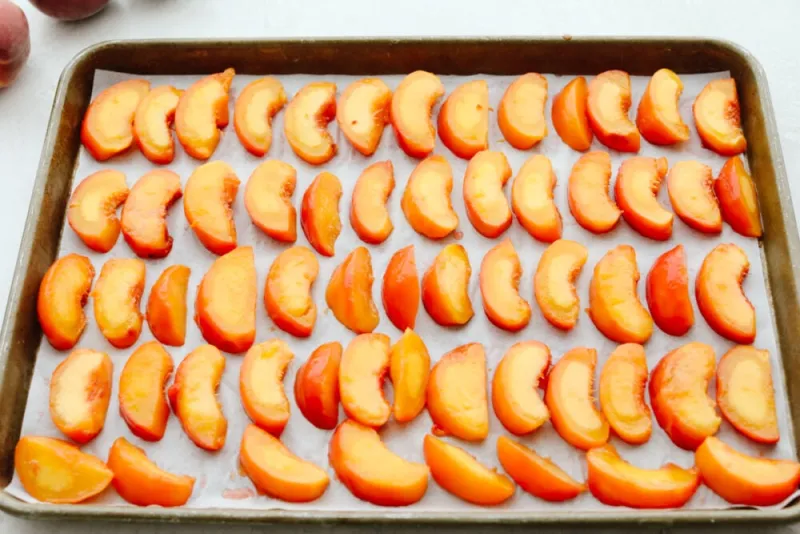
Photo: frozen peach slices on parchment lined baking sheet, via therecipecritic.com
There is a word in Japanese that American kitchens would do well to borrow: shun (旬). It refers to the brief window when an ingredient reaches its perfect peak — the moment a food is not merely good, but truest to itself. For the peach, shun may last only two or three weeks. The rest of the year, we eat echoes.
Or, if we plan carefully, we eat something closer to the original voice.
The Freezer as a Place of Intention
In most American households, the freezer is a place of postponement. Bread goes in to outlast our appetites. Leftovers slide to the back and are rediscovered, frostbitten, in February. It is storage as an afterthought.
The Japanese approach to preservation suggests a different relationship. Whether it is umeboshi resting in their jar or dried persimmons hanging beneath the eaves, the underlying gesture is the same: this food deserved better than to be wasted, so I gave it my full attention. The freezer, used this way, is not a cold closet. It is a shrine to a moment you refuse to let go of.
This shift in mindset changes everything about how you freeze a peach.
Choosing the Fruit Worth Remembering
Begin at the farmers market or orchard, not the supermarket bin. You are not looking for peaches that are merely ripe — you are looking for peaches at the exact summit of their shun. Fragrant from a foot away. The flesh giving just slightly at the shoulder. A slipstone or freestone variety grown within driving distance of your kitchen.
Buy a flat. This is not excess; it is commitment. A single frozen peach is a novelty. A dozen, labeled and dated, is a season you can visit all winter.
The Ritual, Step by Step
1. Blanch with respect. Score a shallow X at the base of each peach and lower it into boiling water for thirty to forty-five seconds, then into an ice bath. The skin slips away like a coat being removed. Do not rush this — torn flesh now means mushy slices later.
2. Slice with intention. Cut each peach into even, generous wedges, roughly three-quarters of an inch thick. Uniformity is not fussiness; it is a promise to your future self that every slice will thaw at the same pace and behave the same way in a winter crisp or a bowl of yogurt.
3. Choose your sugar honestly. Toss the slices gently with sugar at a ratio of about one part sugar to four parts fruit by weight — or skip the sugar entirely if you plan to bake. A splash of lemon juice keeps the color honest. The Japanese instinct here is restraint: sugar is a preservative and a companion, not a mask.
4. Freeze in a single layer. Arrange the slices on a parchment-lined sheet pan, not touching, and freeze until solid — a few hours. Only then transfer them to bags or containers. This step, borrowed from professional kitchens, prevents the sad frozen brick that forces you to use everything at once.
5. Label like a scholar. Write the variety, the date, and — if you like — one word about the fruit. Honey-sweet. From the orchard on Route 9. A freezer full of anonymous bags is storage. A freezer full of labeled memories is an archive.
What Winter Tastes Like
Between January and April, those slices become more than ingredients. Fold them, still half-frozen, into a blender for a slushy morning smoothie. Simmer them down with a cinnamon stick for pancake topping on a snow day. Tuck them into a buttery crumble when the sky is the color of old newspaper.
Each time, you are doing something quietly profound: eating summer out of season, and tasting it honestly anyway.
A Closing Thought from the Juku
At Momoiro Tomejuku, we teach that cooking is a form of attention. Freezing peaches at their peak is one of the humblest lessons in our curriculum, and one of the most lasting. It asks only an afternoon in late July. It returns, month after month, a spoonful of the season's truest self.
The peach will not wait. But you, with a sheet pan and a little ceremony, can.