One Hundred Slices: The Humbling Arithmetic of Learning to Cut a Peach
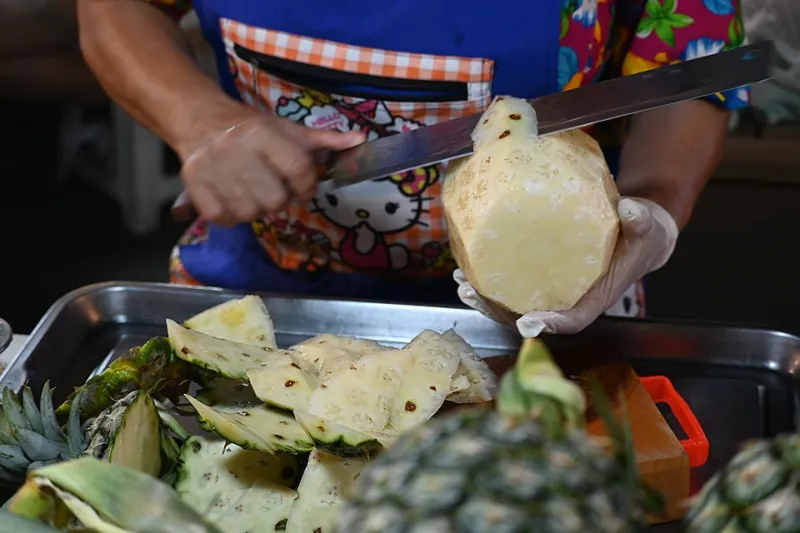
Photo: PattayaPatrol, CC BY-SA 4.0, via Wikimedia Commons
On my third morning at the juku, I asked my teacher when we would begin cooking. She was sorting peaches by ripeness and did not look up. "We began cooking the day you arrived," she said. "You have been slicing them wrong for two days."
I had come to rural Japan expecting to learn recipes. What I received instead was a knife, a wooden board, and a wooden crate of peaches, with instructions to slice each one into twelve even pieces. One hundred peaches. Then another crate.
The Curriculum of the Crate
The peach, it turns out, is an unforgiving teaching fruit. Its flesh is softer than an apple and less yielding than a tomato; it demands a blade that is genuinely sharp and a hand that is genuinely patient. Slice too slowly and the skin tears. Slice too fast and the fruit crushes. There is a tempo, and it cannot be explained—only found.
My first hundred slices were, by my teacher's assessment, "various." Some were wedges, some were slumps, several were closer to bruises than cuts. By the third crate, something shifted. My wrist stopped steering and started listening. The blade began to fall through the fruit rather than press into it. On day nineteen, she took a slice from my board, examined it against the light, and said, "Now we can discuss heat."
What Repetition Actually Builds
American kitchen culture is allergic to this kind of exercise. We buy gadgets that pit and slice a peach in one motion; we watch forty-five-second videos; we treat fundamentals as obstacles between us and the finished dish. The assumption is that repetition is wasted time. My teacher's assumption was the opposite: repetition is the only time that isn't wasted, because it builds the one thing no recipe can supply—judgment in the hands.
Here is what those weeks of slicing actually taught, though I did not know it at the time:
- Reading the fruit. Every peach is different in ripeness, juiciness, and structure. A hundred peaches force you to adjust for each one. This is the foundation of all cooking with fresh ingredients.
- Blade awareness. You cannot hide a dull knife from a peach. The fruit reports the state of your edge with total honesty, and maintaining sharpness stops being a chore and becomes a habit.
- Consistency of intention. Twelve even slices cook evenly, look intentional, and signal care to whoever eats them. Uneven slices are the visible signature of a distracted mind.
The Case Against the Shortcut
I want to be careful here. I own a cherry pitter. I am not arguing that American home cooks should suffer. But there is a difference between a tool that removes drudgery and a shortcut that removes understanding—and we have largely stopped being able to tell them apart.
The home cook who has never sliced a hundred peaches does not know how ripeness changes under the blade. They do not know that a knife should be wiped between fruits, or that a cut made toward the pit differs from one made away from it. These are small ignorances, but they compound. They are why the same recipe produces different results in different hands.
Bringing the Crate Home
You do not need to fly to Japan to practice this. You need one crate of in-season peaches, a sharp knife, and an afternoon you have decided not to rush. Slice them all—evenly, attentively—then macerate the results with sugar, or pickle them in vinegar, or simply serve them to your family and notice what you notice.
The lesson of the crate is not about peaches. It is about the difference between following a recipe and understanding an ingredient. My teacher gave me no recipes for three weeks. She gave me something harder to acquire and far more durable: the beginnings of a hand that knows what it is doing.