A Jar Meant to Leave: Syrup-Preserved Peaches for the Neighbor Down the Hall
Photo: Unknown, CC0, via Wikimedia Commons
There is a particular kind of cooking that exists only for someone else. You will never taste it at its best. You will not see it opened, and you may never learn whether it was enjoyed. In the traditional Japanese kitchen, this is not a deficiency — it is the point. The food is finished when it leaves your hands.
At our juku, the peach occupies a privileged place in this tradition. Its season is brief, its skin is fragile, its perfume fades within days. To preserve a peach in gentle syrup — what many American readers will recognize as a kompot or compote — is to perform a small act of hope: that someone, somewhere, will open this jar at the right moment and taste summer exactly as it was.
The Gift Before the Greeting
Americans already have a rich vocabulary of doorstep generosity. We bring casseroles after a loss, cookies when a moving truck appears on the block, a welcome basket when the new family finally waves back. The custom is warm, but it tends to be reciprocal — we give because we expect to be neighbors now, because the casserole dish will come back.
The Japanese approach asks something quieter of us. A preserved food given to someone you have never met, with no expectation of return, carries a different weight. There is no social contract attached. The jar is not an opening move in a friendship; it is simply a kindness, completed.
When my family moved into a third-floor apartment in a mid-sized American city, I knew none of my neighbors' names. Rather than knock with a plate of brownies, I spent an August afternoon making peach kompot — six jars of it — and left one at each door with a folded note: Peaches from the farmers market down the street. Please enjoy. I did not sign my name.
Making Kompot With Giving in Mind
The method itself is forgiving, which suits its purpose. A gift that demands perfection from the maker is a gift that never gets made.
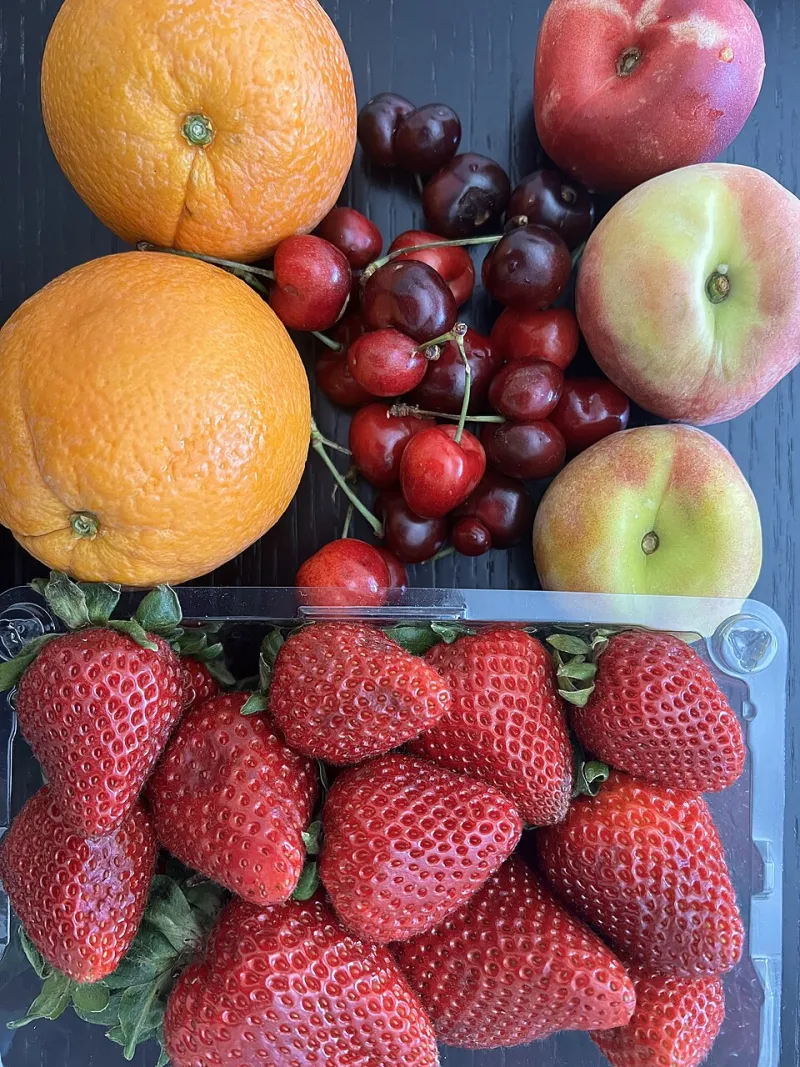
Choose peaches that are ripe but still firm — the fruit should yield to gentle pressure at the shoulder, not at the base. Blanch them for thirty seconds in boiling water, then shock them in ice water so the skins slip away cleanly. Halve them, remove the pits, and set the halves cut-side down in a wide pot.
For the syrup, resist the American instinct toward sweetness. Use water, a modest amount of sugar, and — this is where the Japanese kitchen differs — a small pinch of salt. The salt does not make the kompot salty; it makes the peach taste more like itself. A strip of lemon peel or, if you have it, a single dried umeboshi tucked into the pot adds a quiet acidity that keeps the syrup from becoming cloying.
Bring the pot barely to a simmer. Never a boil. The peach should poach, not cook — ten minutes at most, then let the whole pot cool in its own liquid. This patience is what separates kompot from canned fruit: the syrup remains clear, the flesh holds its shape, and nothing tastes of hurry.
Pack the halves into clean jars, pour the syrup over, and seal. Refrigerated, they keep for several weeks. Given away, they keep for exactly as long as it takes a stranger to find them.
What Happens to a Hallway
I will not pretend the kompot transformed my apartment building. But three weeks later, a woman from 4B stopped me by the mailboxes and said her mother had been ill, and the peaches were the first thing she'd wanted to eat all month. I never would have learned that over a plate of brownies.
Food preservation as gifting does something that fresh food cannot. It says: I thought of you during a quiet afternoon I had entirely to myself. It carries time in it — the hours of blanching and skimming, the cooling pot, the wiped jar rims. In a culture that increasingly gives gift cards and grocery deliveries, a jar of hand-poached peaches is an artifact of attention.
And because it keeps, it removes the pressure that doorstep gifting so often carries. The recipient need not eat it tonight, need not invite you in, need not owe you a dish in return. The jar waits. That is its kindness.
A Practice Worth Adopting
If you wish to try this, begin with one jar more than you need. Make kompot for your own table, and let the extra jar be the one that leaves. Choose a neighbor you have never spoken to — the person with the quiet dog, the student who moved in during a rainstorm, the elderly man who shovels his sidewalk before dawn.
Attach no note demanding thanks. A name, if you like. Nothing more.
The Japanese kitchen teaches that the finest expression of hospitality is not abundance but intention — a single, well-made thing offered without condition. A jar of peaches in clear syrup, cooling on a stranger's counter, may be the purest version of this we can practice in an American neighborhood. The season is short. The gesture is not.