Stem Up, Alone No More: The Counter-Ripening Method I Finally Learned in My Fourth Summer
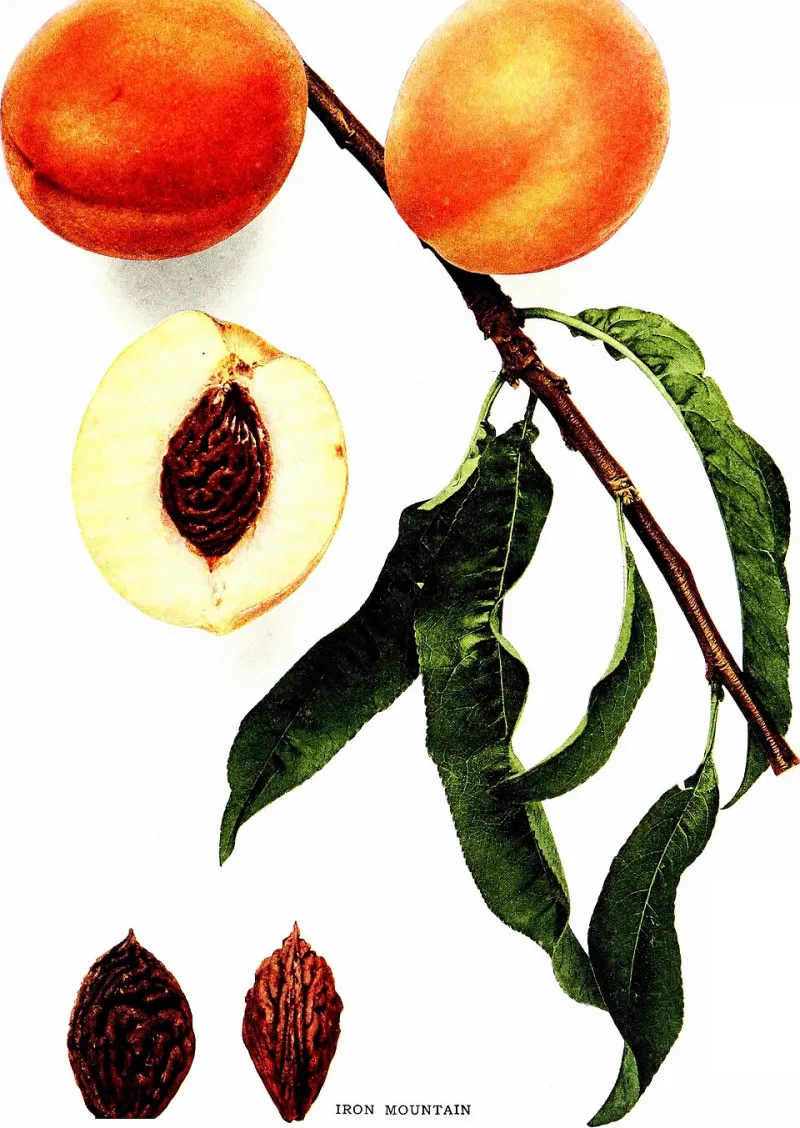
Photo: Hedrick, U. P; Howe, G. H. (George Henry), b. 1888; New York State Agricultural Experiment Station; New York (State). Dept. of Agriculture; Herndon/Vehling Collection. fmo, No restrictions, via Wikimedia Commons
The Confession of a Careless Student
For three summers, I bought beautiful peaches from my farmers market in Vermont and brought them home to a slow, disappointing death. Some went straight into the refrigerator, where they turned mealy and mute. Others sat in a ceramic bowl on the counter, stacked carelessly against bananas, stem-side down, and ripened unevenly — soft on one shoulder, hard as an apple on the other. I blamed the fruit. I blamed the farm. I never once blamed my method.
It was not until I began studying at a traditional cooking juku that I understood the problem was never the peach. It was me. Ripening, my teacher explained, is not something that happens to fruit. It is something you attend to. In the Japanese kitchen, the days between purchase and peak ripeness are not a waiting period. They are a lesson.
What Most American Kitchens Get Wrong
Let us diagnose the three errors I committed, because I suspect they live in your kitchen too.
First, the refrigerator. Cold halts the enzymes that convert starch to sugar. A peach refrigerated before ripening will never develop its full flavor — it will only soften, and softening is not ripening. This is the single most common mistake in American households, where we treat the refrigerator as the default home for all food.
Second, the crowded bowl. Peaches left loose among other fruit bruise at every point of contact, and each bruise becomes a soft, browned pocket of waste. We pile them because bowls are round and peaches are many.
Third, and most subtly, the stem-side-down position. The shoulder of the peach — the side opposite the stem — is the most delicate part of the fruit. Rest a peach on its shoulder and its own weight becomes an instrument of slow damage.
The Japanese Method: Paper, Position, and Daily Attention
The correction is simple, but simplicity in the Japanese tradition is never carelessness. It is discipline distilled.
Position the peach stem-side up, resting on its firm base, so the tender shoulder faces the ceiling and carries no weight at all. Arrange each peach so the fruits do not touch. A shallow bamboo steamer is ideal; a baking sheet lined with a clean cotton towel works beautifully in any American kitchen.
Wrap in paper, not plastic. My teacher used unbleached paper, folding each peach into a loose envelope. Paper absorbs excess moisture while trapping the ethylene gas the fruit naturally releases — the very hormone that signals ripening. Plastic traps moisture instead, inviting mold. In a pinch, a paper lunch bag left partially open accomplishes the same work.
If you need speed, add an apple or a ripe banana nearby — but outside the paper wrapping, so their stronger ethylene output coaxes the peach without smothering it.
Observation as a Daily Practice
Here is where the juku way departs from the recipe card entirely. Each morning, you pick up every peach. You turn it a quarter turn. You smell the stem end, where the fragrance gathers first. You press the shoulder with the pad of your thumb — gently, never with the fingertips — and you notice what changed since yesterday.
This takes perhaps two minutes. But those two minutes train something no cookbook can teach: the ability to read a fruit. By the fourth or fifth day, you will detect ripeness by scent alone. By the end of the season, you will know a peach is ready hours before it looks ready.
My teacher called this kanji — not the written characters, but the older sense of the word: intuitive discernment built through repeated, attentive practice. The peach is a patient teacher. It offers a new lesson every single day it sits on your counter.
When Ripeness Arrives, and What to Do Then
A properly ripened peach gives slightly at the shoulder, smells like honey through the paper, and shows a deepened gold at the stem. At that moment — and only that moment — the refrigerator becomes its friend. Cold now preserves what heat and patience have built, buying you three to five days of peak flavor.
Eat the ripest first. Serve at room temperature, never chilled, so the perfume can reach you before the first bite. And if you find yourself with more ripe peaches than mornings, that is not a problem but an invitation — toward preserves, toward syrup jars, toward the generous act of carrying a perfect peach to a neighbor.
Patience, Studied
I no longer think of my counter as a place where fruit happens to sit. It is a small classroom, and the term lasts about a week. The mistake I made for three summers was believing that ripening was an accident of timing rather than a skill of attention.
It is not. It never was. And the peach, stem up and wrapped in paper, has been waiting all along for someone willing to watch it work.