A Year Mapped in Fuzz: Planning 2026 Peach Study Around American Harvest Windows
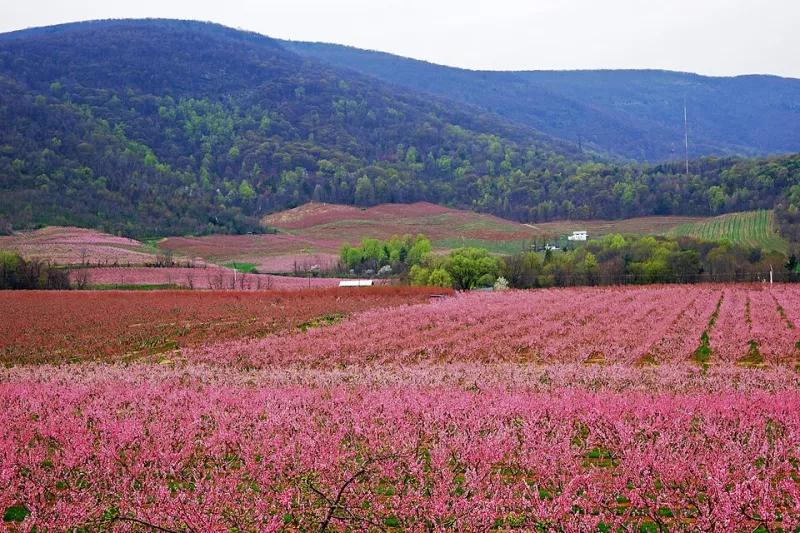
Photo: Karen Blaha, CC BY-SA 2.0, via Wikimedia Commons
The first mistake most students make is treating peach season as a single event. In the United States it is a relay: California hands off to Georgia, Georgia to South Carolina, and by the time the Western Slope of Colorado is picking in August, New Jersey is only reaching its stride. A student who understands the sequence can eat well for five months and study intelligently for twelve.
The windows below are typical rather than guaranteed. Weather moves them by two or three weeks in either direction, and a late frost can erase a whole region's crop. Treat the map as a plan and the farm stand as the authority.
How to Read This Map
Three distinctions matter more than any date.
Harvest begins is not peak. Early fruit is often smaller, firmer, and higher in acid. Peak — usually two to four weeks after the first picking — is when aroma and sugar are most consistent.
Region within a state matters more than the state itself. Colorado's Western Slope behaves nothing like the Front Range; upstate New York nothing like Long Island.
Freestone versus clingstone is a calendar question as much as a culinary one. Early-season fruit tends toward clingstone; mid- and late-season fruit is more often freestone.
California: May Through August
The Central Valley — Fresno, Tulare, Stanislaus, and Kings counties — produces the majority of the nation's peaches and sets the earliest dates. Clingstone fruit for canning arrives first; freestone peaks from late June into July. Sacramento Valley and the Sierra foothills run a few weeks behind. Much of what appears in American supermarkets in June originates here, which means the fruit has often traveled further than its flavor can survive. Buying closer to the orchard remains the single largest improvement a student can make.
Georgia: Late May Through Early August
Georgia's harvest opens in the south and moves north, with peak generally falling between mid-June and late July. The state's strongest asset is not volume but proximity: roadside stands and U-pick orchards in Crawford, Peach, and Habersham counties put the student within a day of the tree. Ask whether fruit was picked ripe or picked to ship. The answer will tell you most of what you need to know.
South Carolina: May Through August
Often overlooked, South Carolina is among the largest producers east of the Mississippi, with concentrated orchards around Ridge Spring, Johnston, and Monetta. Peak runs June into July, and the Lexington County Peach Festival on the Fourth of July marks the midpoint of the state's season. South Carolina fruit tends to arrive with good acidity — useful for students working on balance.
New Jersey: July Through September
New Jersey is the late-summer counterweight to the Southern states. Orchards in Hunterdon, Gloucester, and Salem counties typically begin in early July and continue into September, which makes the state a strong choice for students who missed the June window elsewhere. Late-season fruit here is often firmer and more aromatic than early fruit, and it is the natural bridge into preservation season.
Colorado: July Through September
Palisade, on the Western Slope, is a study in microclimate: hot days, cool nights, and high altitude produce fruit with concentrated sugar and bright acidity. Peak usually falls in August, coinciding with the town's annual peach festival. Colorado fruit is frequently sold at farmers markets along the Front Range within a day of picking, which makes it a strong candidate for a first serious tasting session.
The Second Tier
Michigan picks mainly in August and September, with western orchards along Lake Michigan benefiting from lake-effect moderation. Pennsylvania runs July into August, with Adams County as the historic center. Washington's Yakima Valley produces heavily in July and August, much of it for processing. The Texas Hill Country opens earliest of all, often in May, though crops are weather-fragile. Alabama, Arkansas, Virginia, New York, and Oregon each offer narrow but worthwhile windows, generally July through September.
Questions That Get Better Answers at the Stand
- “What is peaking this week?” — a grower's answer reveals the actual calendar, not the printed one.
- “When was this picked?” — hours matter more than days.
- “Is this freestone yet?” — a practical test of maturity.
- “What comes in next?” — the question that turns a single purchase into a season plan.
- “Do you have seconds?” — bruised fruit, sold cheaply, is ideal for compote and preservation study.
Building a Twelve-Month Study Calendar
- January through April: pantry work. Open jars put up last summer, review notes, and study dried skins and syrups rather than fresh fruit.
- May: Texas and the earliest California fruit. Begin the tasting journal.
- June: Georgia and South Carolina reach peak. This is the center of the year's fresh study.
- July: California freestones, New Jersey's opening weeks, and the beginning of preservation season.
- August: Colorado, Michigan, and New Jersey at their best. The heaviest month for putting fruit by.
- September: late New Jersey and Michigan fruit; final syrups and frozen slices.
- October through December: the pantry becomes the classroom. Compare what you preserved in June against what you preserved in August.
The Discipline of Waiting
Winter peaches from the Southern Hemisphere exist, and they are usually disappointing. The disappointment is not a reason to avoid them; it is a lesson about distance, cold chain, and the difference between ripeness and appearance. A student who tastes one in January and records an honest note has learned something a summer tasting cannot teach.
Plan the year around the map, but let the fruit correct the plan. That is the difference between a schedule and a study.